
Frenchie IVDD and Back Safety for Sitters
6 min read · Updated July 2026
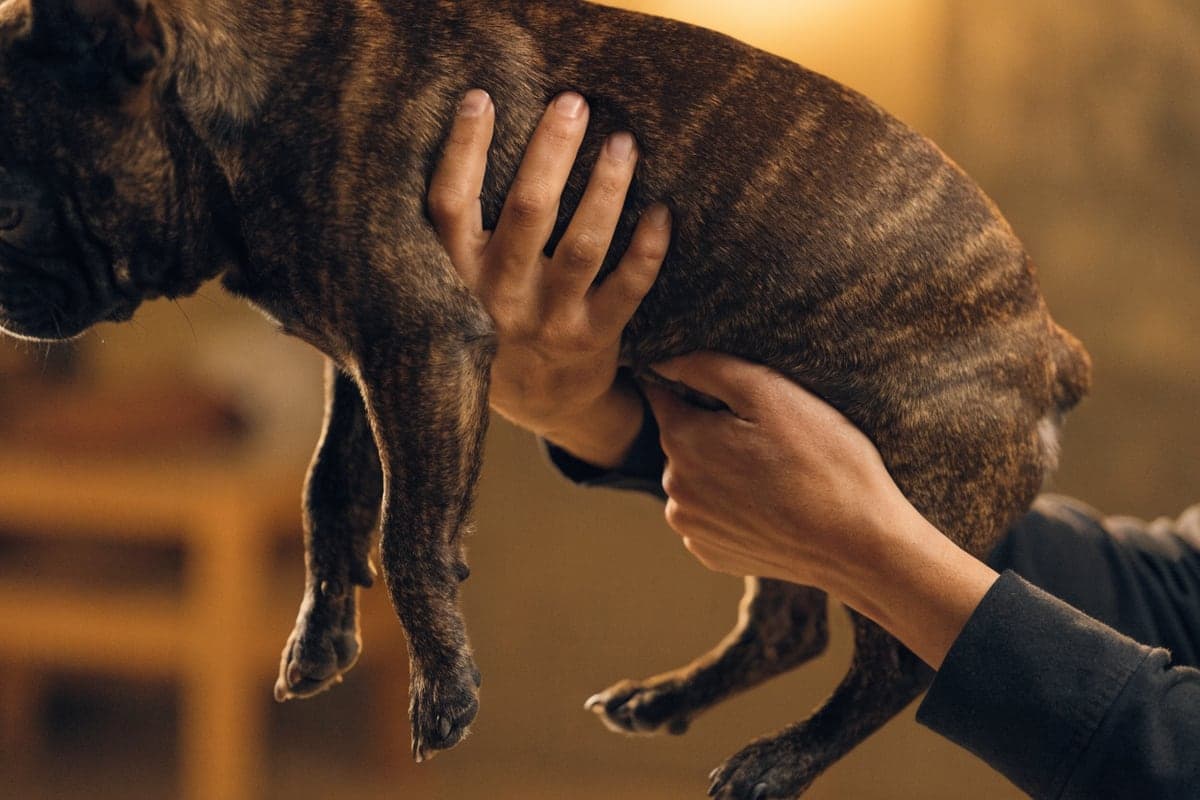
French Bulldogs are a chondrodystrophic breed, meaning their short-legged, long-backed build comes from the same genetics that shape their discs. That makes intervertebral disc disease, IVDD, more common in the breed than in a lot of others, and it's also why French Bulldogs tend to show a first episode earlier in life, and more often in the neck, than breeds better known for back trouble, according to case data summarized by the American College of Veterinary Surgeons. None of that means every Frenchie will have a problem. It does mean handling habits matter more here than they would for a lot of other dogs, and a sitting stay is exactly the kind of new-environment moment where a small slip (a jump off the couch chasing a toy, a sprint down a flight of stairs) can matter.
Handling rules that apply to every stay, symptoms or not
| Do | Don't |
|---|---|
| Carry the dog down stairs, or use a ramp/steps if the owner provides one | Let the dog run or jump down full flights of stairs |
| Lift by supporting chest and hindquarters together | Scoop under the front legs only, or let the dog dangle |
| Use a harness for walks and any lifting handle | Use a collar for anything beyond a calm, controlled walk |
| Block couch and bed jump-offs (a ramp, a lifted hand, a "wait") | Assume a dog that's jumped fine before will always land fine |
| Keep rough play calm and supervised, especially wrestling | Let two dogs body-slam or tug in a way that twists the spine |
These rules apply whether or not the owner has ever mentioned a back problem. A young, currently healthy Frenchie still has the anatomy that makes IVDD more likely over a lifetime, so treating "no jumping off furniture" as a house rule rather than a medical accommodation protects every dog you host, not just one with a known history.
What owners with a known history usually add
If the owner tells you their dog has a history here, ask what their day-to-day looks like now: any activity limits, any signs they specifically watch for, any equipment (a ramp, a particular harness) that's part of the routine. Follow exactly what they describe rather than improvising a version of "back care" from general knowledge, since the specifics (which stairs are off-limits, how much walking is normal) vary dog to dog.
Signs during a stay
Normal: a dog that moves, plays, and rests the way the owner described as typical for them.
Call the owner, not an emergency, but soon: reluctance to jump or climb that's new, a hunched or tucked-up posture, unusual sensitivity when you go to pick them up, yelping when touched in a specific spot, or noticeably less interest in normal activity.
Get to the nearest emergency vet now, then call the owner: sudden pain with crying out, wobbliness or weakness in the back legs, dragging a limb, knuckling over on a paw without correcting it, or any sudden inability or reluctance to stand or walk. Time matters a great deal with a spinal event, so don't wait to see if it resolves on its own; go, then call.
Why "wait and see" isn't the right instinct here
A dog that's painful or wobbly in the back end isn't being dramatic or having an off day. According to the Cornell University College of Veterinary Medicine, how quickly a dog with a spinal injury gets seen has a real bearing on outcomes, which is exactly why this guide treats "possible back injury" as an emergency-vet call rather than a monitor-at-home situation, and why hosts are asked to trust that instinct rather than a wait-and-see approach.
Read the meet-and-greet checklist for how to confirm a dog's specific handling needs before drop-off, and the medication routine guide if any ongoing management is part of the picture.
Sources
- Intervertebral Disc Disease — American College of Veterinary Surgeons (accessed July 21, 2026)
- Intervertebral disc disease — Cornell Riney Canine Health Center (accessed July 21, 2026)