
Frenchie Allergy and Skin Care for Sitters
6 min read · Updated July 2026
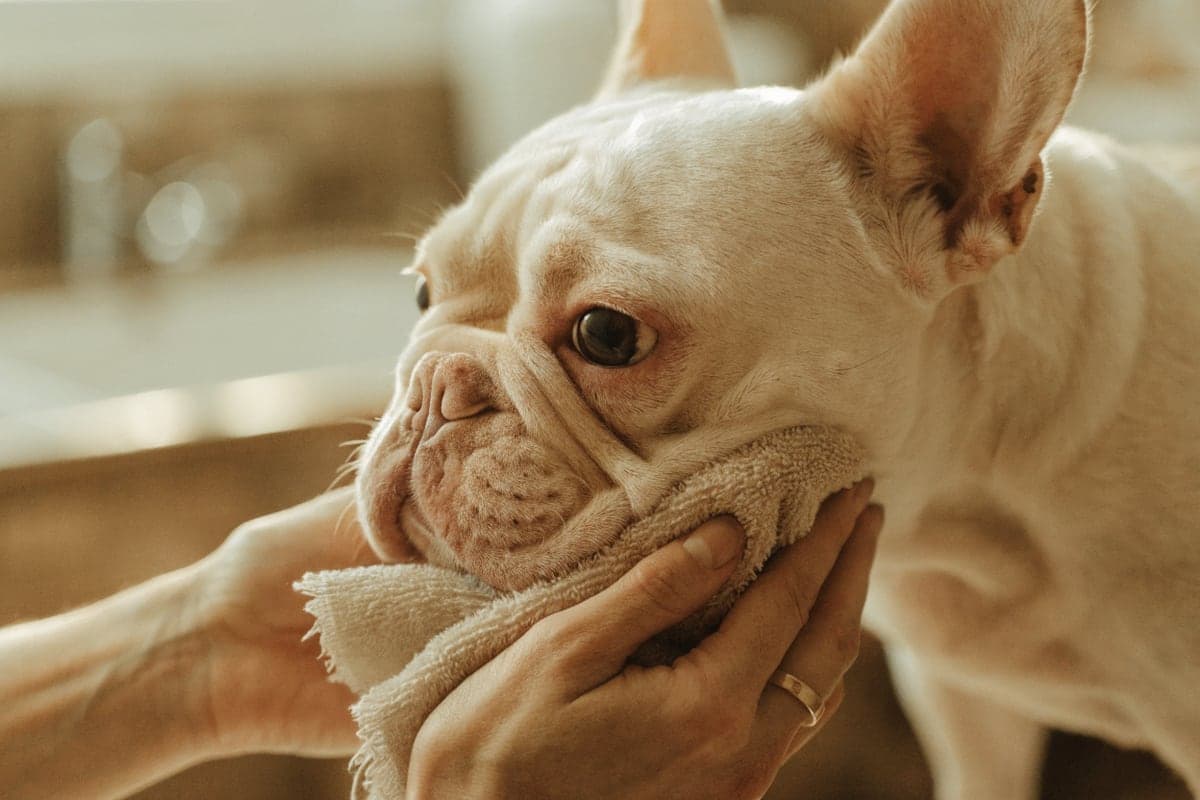
Ask any French Bulldog owner about skin issues and most have a story. It's not your imagination or a sign of a poorly bred dog; the breed's deep facial folds, sensitive skin, and above-average rate of atopic dermatitis (an allergic skin condition affecting an estimated 10–15% of dogs generally, more in predisposed breeds, per Cornell University's Riney Canine Health Center) mean skin care is a routine part of owning one, not a sign something's gone wrong. What a sitter needs is the owner's specific routine and a clear line between "this is what we always do" and "this looks new."
Where problems tend to show up
Facial folds, ears, paws, and the belly are the areas owners watch most closely, since they trap moisture and rub against surfaces more than the rest of the body. A routine wipe-down of the folds after meals or outdoor time is common for this breed, and if the owner has a product or method they use, stick to exactly that rather than substituting your own. The French Bull Dog Club of America points owners toward veterinary dermatology resources precisely because skin and coat issues are common enough in the breed to deserve real attention, not because something is unusual about any specific dog.
What "managed with a routine" looks like day to day
If the owner's Frenchie Card notes an allergy or skin routine, it typically covers one or more of: a specific diet (no substitutions, no "just a little" of something else), a wipe or bath schedule, a topical product applied to specific spots, or an oral medication on a schedule. Treat all of it as instructions to follow exactly, the same way you'd treat a medication routine, rather than general suggestions you can adapt.
Signs during a stay
Normal: occasional face-rubbing on furniture, licking a paw briefly after a walk, the coat and fold care the owner already described as routine.
Worth a call to the owner: redness, a new smell from the folds or ears, persistent scratching or licking at one spot, or a hot spot (a red, moist, irritated patch) that wasn't there at drop-off. None of these are emergencies on their own, but they're worth reporting the same day so the owner can decide whether it needs attention before the stay ends.
Get to the nearest emergency vet now, then call the owner: facial or body swelling, hives, sudden and severe scratching with visible distress, or any skin reaction that appears alongside vomiting, drooling, or difficulty breathing, since that combination can point to a broader allergic reaction rather than a routine skin flare.
What not to do
Don't introduce a new shampoo, wipe, food, or treat "just to help," even with good intentions. Skin issues in this breed are often managed through a specific, tested routine, and an untested product (even one you've used successfully on another dog) can trigger a flare rather than fix one. If you think the current routine isn't working, that's a conversation for the owner, not a reason to experiment.
FAQ
Is it normal for a Frenchie's folds to have some odor?
A faint odor between cleanings is common; a strong or sudden change in smell usually means it's time for the routine wipe-down, or worth a call if it persists after you've done it.
What if the owner didn't leave specific skin-care instructions?
Ask before the stay begins rather than assuming "no instructions" means "no routine." Most owners of a Frenchie with any skin sensitivity have a routine, even a simple one, and it's worth five minutes at drop-off to confirm.
Can I use my own dog's allergy shampoo if it seems similar?
No. Even products marketed for sensitive skin vary in ingredients, and a Frenchie with a known allergy may react to something a different dog tolerates fine. Stick to what the owner provides or explicitly approves.
Read the medication routine guide if the dog's allergy management includes an oral or topical medication, and the meet-and-greet checklist for confirming routines like this in person before drop-off.
Sources
- Atopic dermatitis (atopy) — Cornell Riney Canine Health Center (accessed July 21, 2026)
- Veterinary Health Information — French Bull Dog Club of America (accessed July 21, 2026)